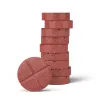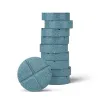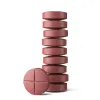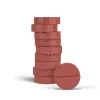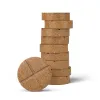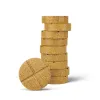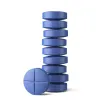

The word “blend” signals that a tablet contains a combined formulation. It does not reveal how much of each component is present. A useful reading starts with the ingredient order and amount disclosures, while leaving undisclosed information undisclosed.
Itemized formula or total blend?
An itemized label assigns an amount to each active ingredient. A total-blend label gives one number for the group. With the latter, you can compare total stated amount and listed components, but you cannot calculate each component's share without additional documentation.
Ingredient order may provide context under labeling rules, yet it is not a substitute for exact amounts. Avoid turning order into invented milligram estimates.
Normalize the serving
Write down tablets per serving, active amount per serving, and package count. If another product uses one tablet per serving, normalize both to a common basis. Then check whether a number refers to the complete complex, one extract, or a named constituent within an extract.
Keep product attributes in separate columns
Strength, flavor, tablet format, count, and documentation each answer a different question. A flavored chewable can carry more other ingredients than a plain swallow tablet. A larger count changes package quantity, not the formula in each unit.
Questions a transparent listing should answer
- Which botanicals or constituents are named?
- Are component amounts itemized?
- What is the serving basis?
- Does a ratio or percentage modify one extract or the total?
- What non-active ingredients are included?
- Is product or batch documentation available?
Labels can support a composition comparison; they cannot guarantee a particular experience or establish that a multi-component tablet is preferable to a single extract. If a formulation is unclear, the accurate conclusion is that the listing needs more information.
Review botanical alkaloid blend labels at TabsMill with a consistent no-guessing checklist.